
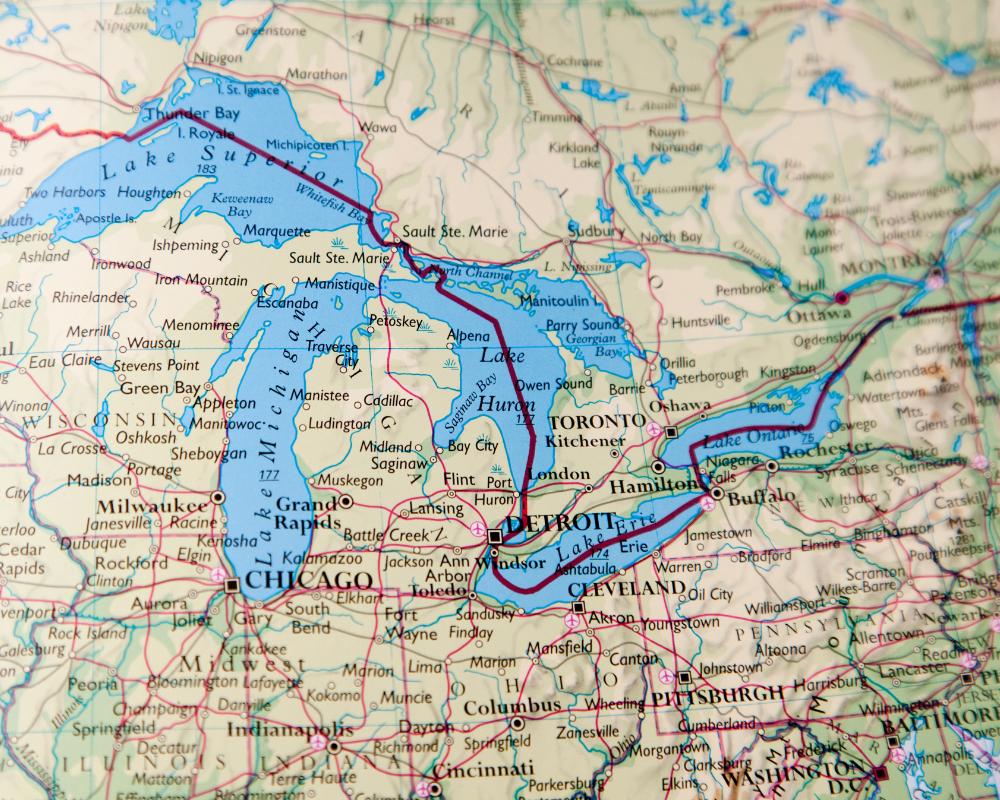
Every once in a while, a regular person says something on the internet that cuts through the noise and lands squarely in the center of the national conversation. That is exactly what happened when a woman — who has since been widely described simply as “a liberal woman” in media coverage — looked into a camera and delivered a message that was equal parts warning and geography lesson. Her argument was blunt: if the United States were ever to experience a fracture along political lines — something she framed as a second civil war — the blue states would hold a decisive strategic advantage. The reason? Fresh water. Blue states, she argued, control the majority of the country’s freshwater resources, including the Great Lakes, which contain roughly twenty percent of the world’s surface fresh water. The clip went viral almost immediately, generating millions of views, thousands of comments, and an intense debate that touched on politics, geography, resource management, and the very fabric of American unity.
The Geography Behind the Claim
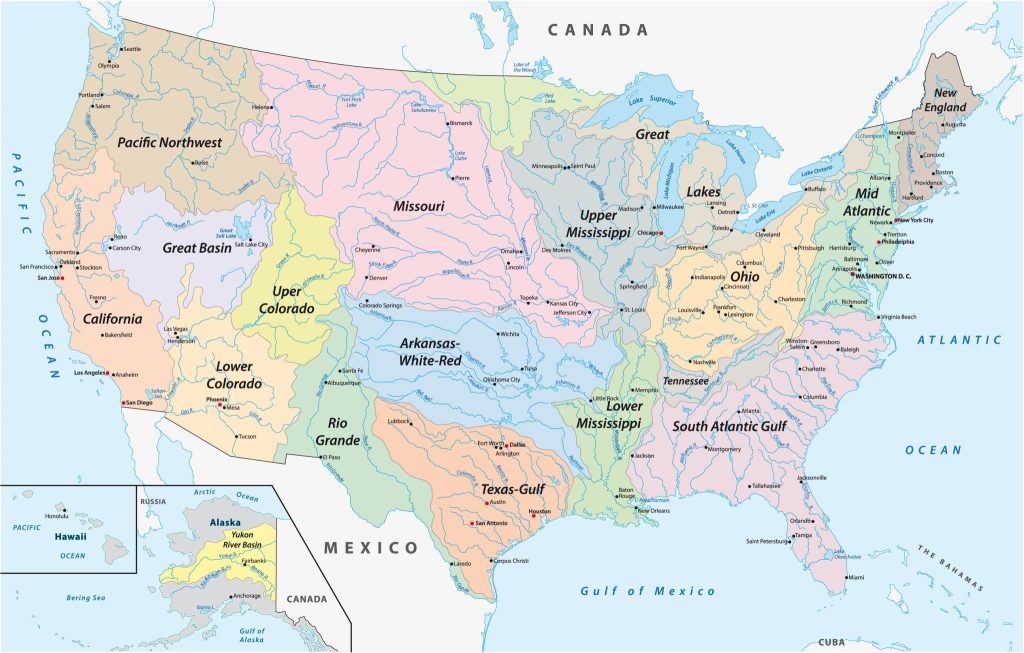
Before diving into the political implications, it is worth examining the factual basis of her statement. And on the geography, she is largely correct. The Great Lakes — Superior, Michigan, Huron, Erie, and Ontario — are shared between the United States and Canada. On the American side, the states that border the Great Lakes include Michigan, Wisconsin, Minnesota, Illinois, Indiana, Ohio, Pennsylvania, and New York. In recent presidential elections, several of these states have leaned Democratic, particularly Michigan, Wisconsin, Minnesota, Illinois, Pennsylvania, and New York. Beyond the Great Lakes, many of the country’s major freshwater reservoirs, river systems, and aquifers are located in states or regions that trend politically blue or purple. The Pacific Northwest receives enormous amounts of rainfall. The northeastern states have abundant rivers and groundwater. California, despite its well-publicized drought issues, still manages one of the most complex water distribution systems in the world. Meanwhile, many of the states that most reliably vote Republican are located in the arid or semi-arid regions of the South and Southwest. Texas, Arizona, and much of the rural West face chronic water challenges. Aquifers like the Ogallala, which underlies much of the Great Plains, are being depleted at rates that far exceed natural replenishment. So yes, in a purely geographical sense, the woman’s observation holds water — pun very much intended.
Why This Struck Such a Nerve
The reason this clip exploded was not because of the geography lesson. It was because of what it implied. In an era where political rhetoric has become increasingly heated — where talk of “national divorce” and secession periodically surfaces in mainstream discourse — the idea that one side might hold a tangible, life-or-death strategic advantage is deeply unsettling. Water is not like oil or natural gas. You cannot live without it. There are no substitutes. You cannot import enough of it to sustain a population. You cannot ration it indefinitely. If a community loses access to clean fresh water, people start dying within days, not months or years. By framing the water issue in the context of a hypothetical conflict, the woman was making a point that goes beyond partisan politics: the states and regions that support certain policies — environmental protections, infrastructure investment, climate action — are also the states and regions that are best positioned to survive a resource crisis. That is not a coincidence. It is a reflection of governance priorities.
The Deeper Issue: Water as a Political Battleground
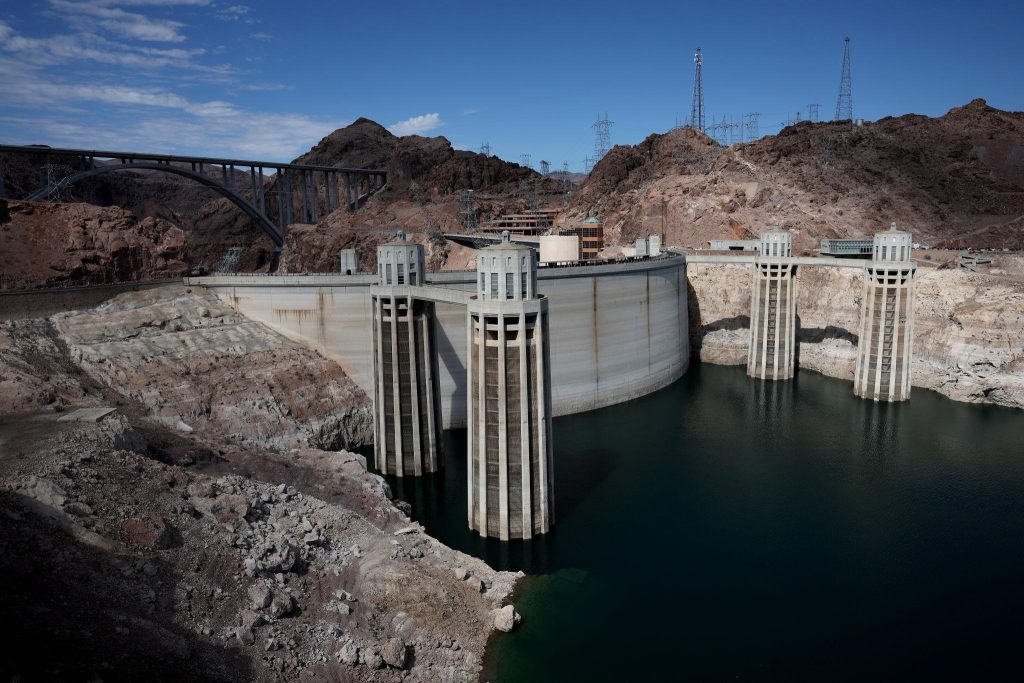
What many people miss about this story is that the “hypothetical” scenario the woman described is not entirely hypothetical. Water disputes are already happening across the United States, and they are intensifying. The Colorado River, which supplies water to roughly 40 million people across seven states, has been in crisis for over a decade. Lake Mead, the country’s largest reservoir, has dropped to levels not seen since the 1930s. States are fighting over allocation rights. Cities are imposing restrictions. Farmers are watching their livelihoods dry up — literally. In the Southeast, disputes over the Apalachicola-Chattahoochee-Flint river system have pitted Georgia, Alabama, and Florida against each other in a legal battle that has been going on for decades. In the West, groundwater depletion is threatening the long-term viability of agriculture in states like Kansas, Nebraska, and Texas. These are not future problems. They are current realities. And they are only going to get worse as climate patterns shift, populations grow, and demand increases. The woman in the viral clip, whether she intended it or not, tapped into one of the most important and under-discussed issues in American life. We spend enormous amounts of political energy debating immigration, taxes, and culture war issues. We spend almost no time talking about the fact that significant portions of the country are running out of water.
The Reaction and What It Reveals

The response to the clip was predictable in some ways and revealing in others. Progressive commentators largely praised the woman for making a point that they felt was both factually accurate and strategically astute. Conservative commentators largely dismissed it as fearmongering or mocked it as naive. But beneath the surface-level reactions, something more interesting emerged. Many people — on both sides of the political spectrum — began genuinely researching where their water comes from. Social media filled with maps, charts, and data about freshwater distribution. Conversations about water infrastructure, desalination technology, and conservation practices entered the mainstream in a way they rarely do. That, arguably, is the most valuable outcome of the entire episode. Regardless of whether you think the woman’s scenario is plausible, absurd, or somewhere in between, she got people thinking about water. And in a country where large regions are heading toward genuine water crises, thinking about water is exactly what we should be doing.
Beyond the Hypothetical
The uncomfortable truth is that America does not need a civil war for water to become a flashpoint. It just needs to keep doing what it has been doing — ignoring aging infrastructure, resisting conservation measures, and treating an irreplaceable resource as though it were infinite. The Great Lakes Compact, signed in 2008, already restricts the diversion of Great Lakes water to regions outside the basin. That law exists because the states surrounding the lakes recognized that their water is not unlimited and that demand from water-scarce regions would only increase. As droughts intensify in the South and West, pressure to access northern freshwater resources will grow. That pressure will manifest in legal battles, political negotiations, and — if history is any guide — significant tension between regions with very different needs and very different political orientations. The woman in the video was making a point about a hypothetical conflict. But the real story is about a very real resource that is already at the center of some of the most important — and most overlooked — policy battles in the country. Fresh water is finite. Politics is not going to change that. But politics might determine who gets access to it, who pays for it, and who goes without. That is worth thinking about — whether you live in a blue state, a red state, or somewhere in between.