
The Man Who Turned Mockery into Magnificence
There are many ways to respond to prejudice. You can ignore it. You can confront it. You can let it eat away at you quietly. Or, if you are Reuben Singh, you can buy fifteen Rolls-Royce cars in different colors and match each one to a different turban. Because sometimes the best response to someone trying to make you feel small is to live so large that they cannot look away. Reuben Singh’s story has circulated across the internet for years now, and every time it resurfaces, it finds a new audience. The appeal is obvious — it is a story about defiance, identity, and absurd levels of success delivered with a sense of humor that makes you want to stand up and applaud. But beneath the Rolls-Royces and the turbans, there is a much deeper story. A story about what it means to be visibly different in a world that often rewards conformity, and about the quiet strength it takes to refuse to change who you are — even when doing so would make your life considerably easier.
Who Is Reuben Singh?

Reuben Singh was born in 1976 in the United Kingdom to a Sikh family of Indian origin. The turban is central to Sikh identity — it is not a fashion accessory or a cultural curiosity but a deeply held article of faith. For Sikh men, wearing a turban is a commitment to the values of equality, honor, and service that define their religion. Growing up in Britain as a turbaned Sikh boy was not always easy. The UK of the 1980s and 1990s, while multicultural in many urban areas, could be hostile to visible difference. Reuben experienced his share of comments, jokes, and outright discrimination. People stared. People mocked. People assumed that a boy in a turban could not possibly be destined for anything remarkable. They were spectacularly wrong. Reuben founded his first business at the age of seventeen. It was a fashion retail company called Miss Attitude, aimed at young women. By the time he was twenty, the company was turning over significant revenue. By his early twenties, he had been featured in major business publications and was being compared to Richard Branson as one of Britain’s most promising young entrepreneurs. He went on to found alldayPA, a telephone answering service that grew into one of the UK’s leading business services companies. He invested in technology startups, real estate, and luxury goods. His net worth climbed into the tens of millions. And through all of it — every business meeting, every magazine cover, every television appearance — he wore his turban.
The Rolls-Royce Response
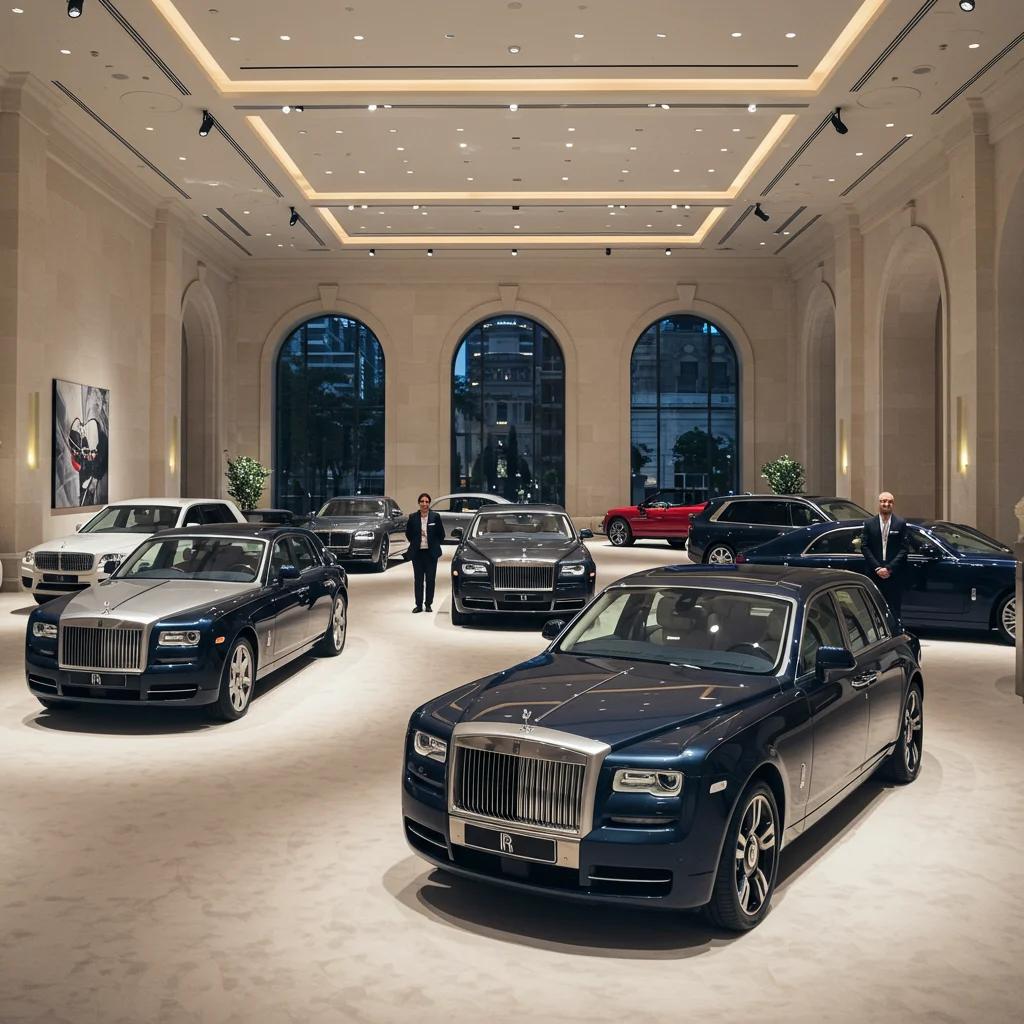
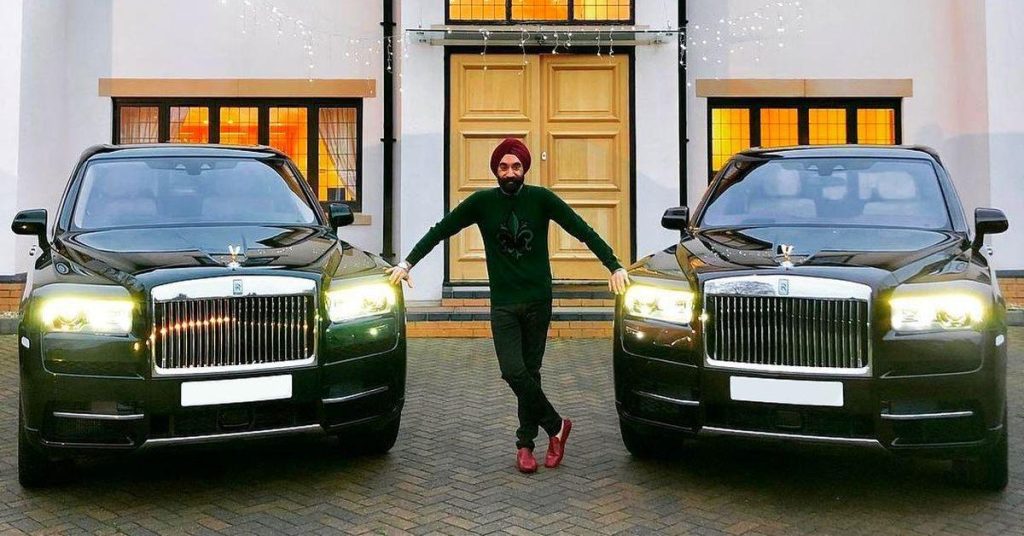
The specific incident that led to the fleet of Rolls-Royces varies slightly depending on which version of the story you encounter. The most widely circulated account suggests that Reuben was told by someone — a business associate, an acquaintance, or in some versions, a car dealership employee — that a man in a turban did not belong in a Rolls-Royce. The implication was clear: luxury and visible Sikh identity were incompatible. Reuben’s response was not a Twitter thread or a strongly worded letter. He went out and bought not one, not two, but fifteen Rolls-Royce automobiles. Each one was a different color. And he began coordinating his turban to match whichever Rolls-Royce he was driving that day. Red turban? Red Rolls-Royce. Blue turban? Blue Rolls-Royce. Gold turban? You already know. The photographs that documented this practice are extraordinary. Reuben standing in front of each car, arms crossed, turban perfectly coordinated, with an expression on his face that says everything without saying a word. It is joy. It is defiance. It is a man who decided that the best revenge against small-mindedness is living a life so vivid that it makes the prejudice look pathetic by comparison.
Why the Turban Matters
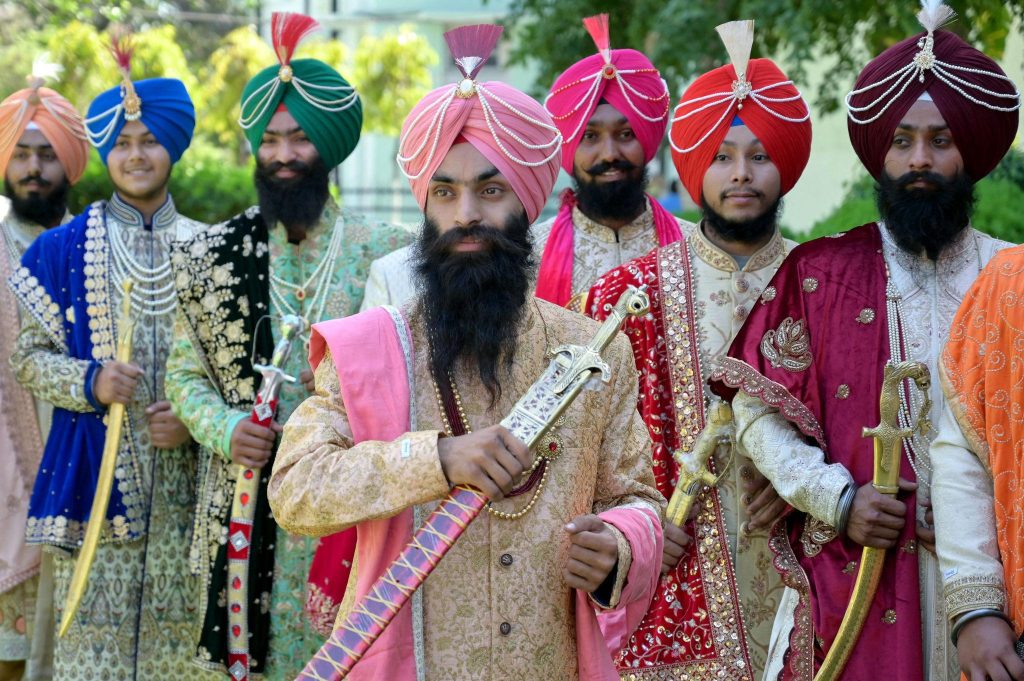
To understand why this story resonates so deeply, you need to understand what the turban represents. In Sikhism, the turban — or dastar — is far more than a head covering. It is a crown of faith. It represents sovereignty, self-respect, and the refusal to bow to anyone but the Almighty. Sikh men have been wearing turbans for over five centuries, dating back to the founding of the Khalsa by Guru Gobind Singh in 1699. The turban identifies a Sikh as someone who stands ready to serve and protect. It is a public declaration of values. For Sikh communities around the world, the turban has also been a source of both pride and vulnerability. In the aftermath of September 11, 2001, turbaned Sikh men in the United States and elsewhere became targets of hate crimes committed by people who mistook them for Muslims — as if that would have justified the violence in any case. Sikh taxi drivers, shopkeepers, and students were attacked. Some were killed. In this context, Reuben Singh’s decision to not only keep wearing his turban but to make it the centerpiece of an extravagant display of success is a profoundly meaningful act. He did not just refuse to hide. He celebrated.
The Message Beyond the Cars
The Rolls-Royce story has become something of an internet legend, and like all legends, it has taken on a life of its own. But Reuben himself has been clear about what he wants people to take away from it. It is not about the cars. It is not about the money. It is about the principle that no one gets to define your worth based on how you look, what you wear, or where you come from. In interviews, Reuben has spoken about the responsibility he feels as a visible Sikh in the business world. He knows that young Sikh men and women look at him and see possibility. He knows that every time he walks into a boardroom wearing his turban, he is normalizing something that should not need normalizing but still does. His fleet of Rolls-Royces is not an exercise in vanity. It is a statement — a colorful, flamboyant, unmissable statement — that says: I am here. I am successful. I am Sikh. And I am not going to make myself smaller so that you can feel more comfortable.
The Lasting Impact
Reuben Singh’s story continues to inspire people well beyond the Sikh community. It resonates with anyone who has ever been told they do not belong — because of their religion, their ethnicity, their accent, their clothing, or any other aspect of their identity that makes them visibly different. The lesson is not that you need to buy fifteen luxury cars to prove your worth. The lesson is that the best response to being underestimated is to exceed every expectation, loudly and unapologetically. It is about refusing to internalize someone else’s limitations. In a world that often pressures people to blend in, Reuben Singh chose to stand out — literally, in every color of the rainbow, with a matching turban and a Rolls-Royce. And that choice, more than any business deal or bank balance, is his greatest achievement. Because at the end of the day, the cars will depreciate. The money may fluctuate. But the message — that you never have to apologize for who you are — is priceless.
Hi, this is a comment.
To get started with moderating, editing, and deleting comments, please visit the Comments screen in the dashboard.
Commenter avatars come from Gravatar.